Rising bond yields have gotten most of the attention over the past few months with the yield on 10-year U.S. Treasury bonds having increased from 4.5% in July to 5.3% as of this writing in early October. While the recent decline in bond values has not been pleasant for bondholders, stocks have held up quite well, driven by continued strong growth in corporate profits with 2027 consensus expectations for S&P 500 companies now up to +15% earnings growth (despite coming off a very strong 2026 performance!).
One helpful rule of thumb that we recently came across was the idea that government bond yields should approximate nominal GDP growth over time. In the U.S. for example, recent GDP growth has been 6% on a nominal basis which helps explain part of the recent rise in 10-year yields above the 5% level.
While many governments (including the U.S.) continue to run unsustainably high budget deficits, we have seen this movie before and trust that government officials in major economies around the world will (eventually) take the necessary steps to maintain confidence in their ability to pay back their debts.
Lastly, the best predictor of future bond returns has historically been current market yields. Thus, the recent rise in rates should be helpful from here for anyone owning or buying bonds. When life gives us lemons, we do our best to enjoy some lemonade.
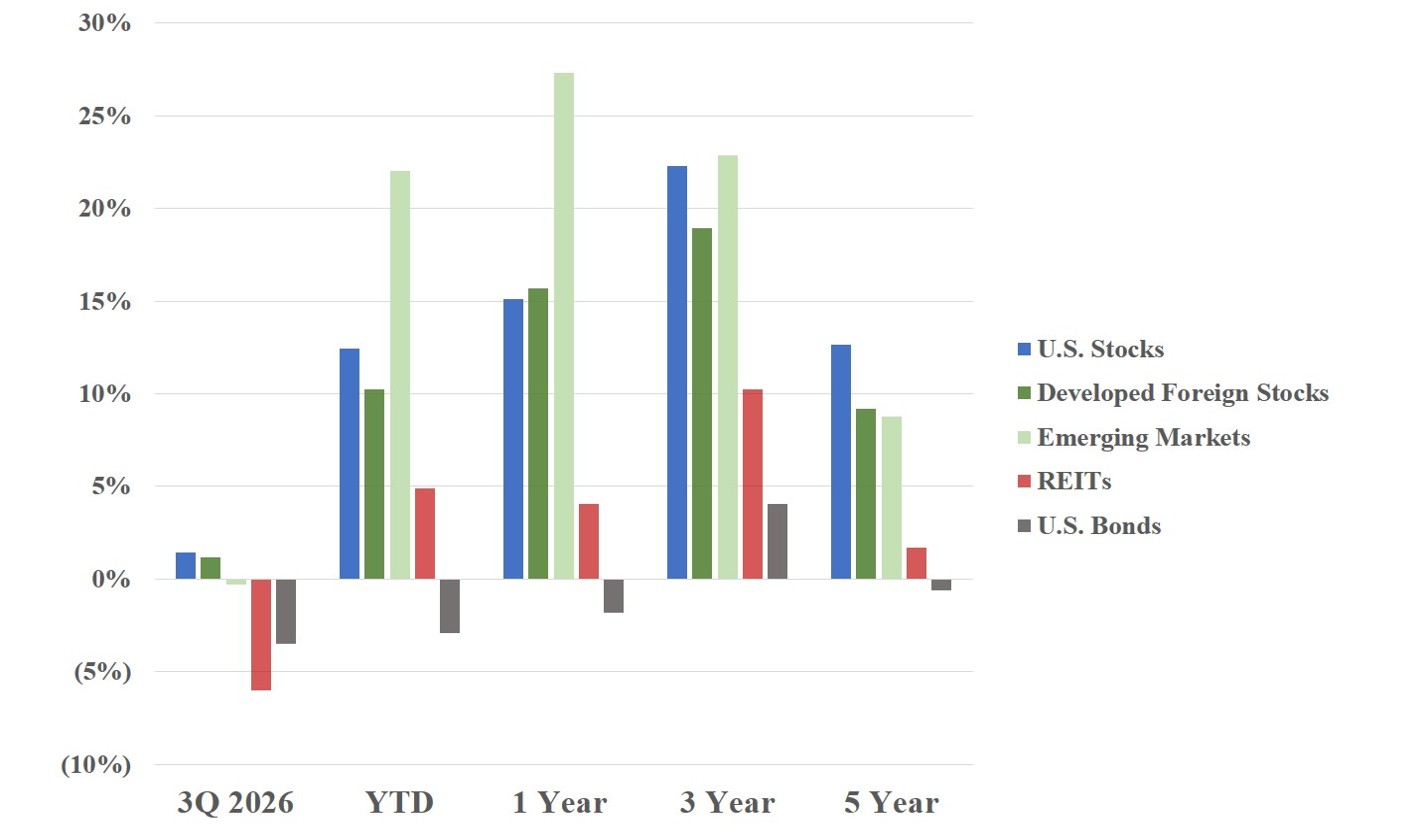
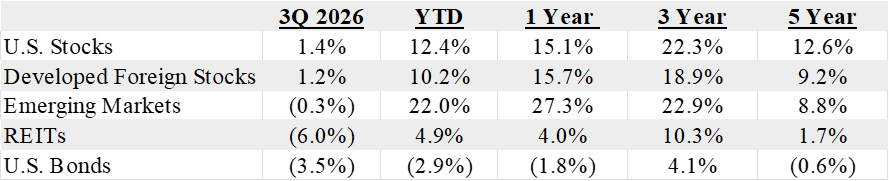
Index performance is provided as a benchmark. It is not illustrative of any particular investment. An investment cannot be made in an index. Past performance is not an indication of future results. Russell 3000 Index, MSCI World ex USA Index, MSCI EM Index, S&P Global REIT Index, US Aggregate Bond Index. Returns as of 9/30/2026.
Economic Review
[Keep in mind: the economic data usually lags a bit]
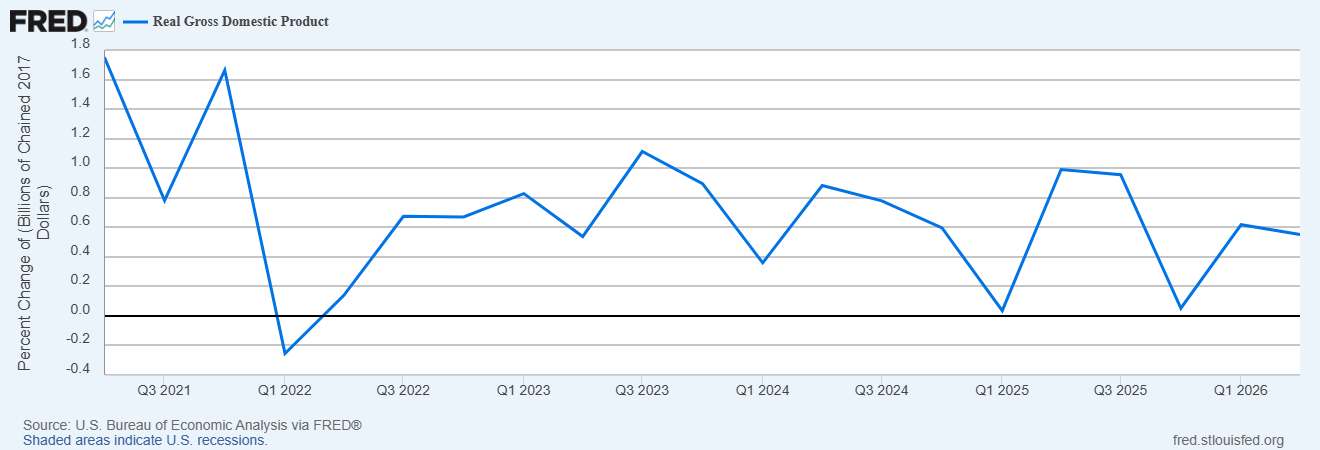
Real (inflation-adjusted) GDP growth was relatively stable at +2% annualized with ongoing support from businesses investing in technology equipment & infrastructure.
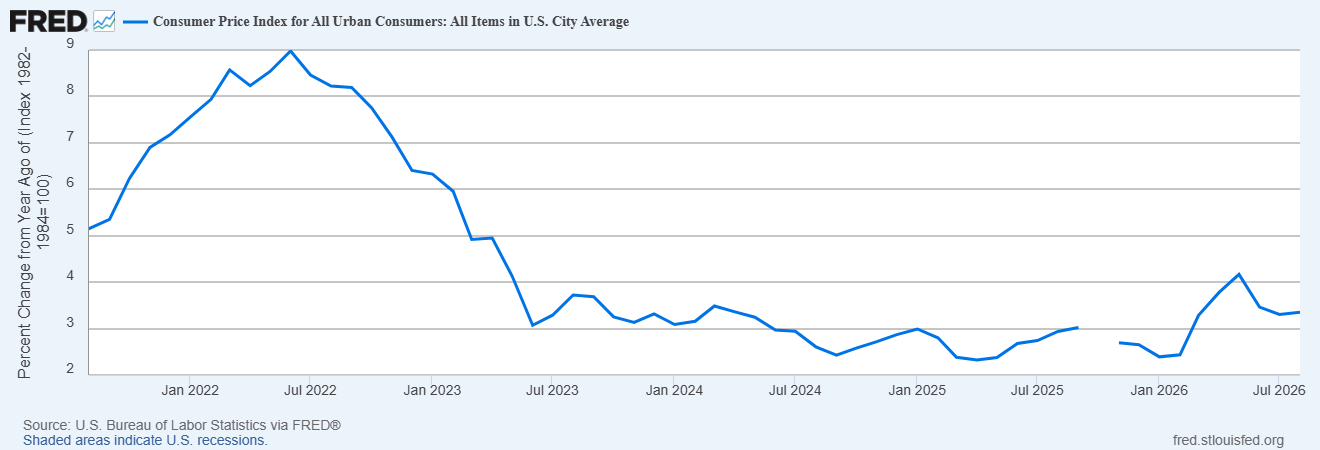
Headline inflation remained above 3% in August but some of the underlying trends were encouraging. For example, core inflation (which excludes food & energy costs) was only 2.4% higher than last year and the three-month annualized pace for core inflation slowed to 2.0% which is consistent with the Fed’s target.
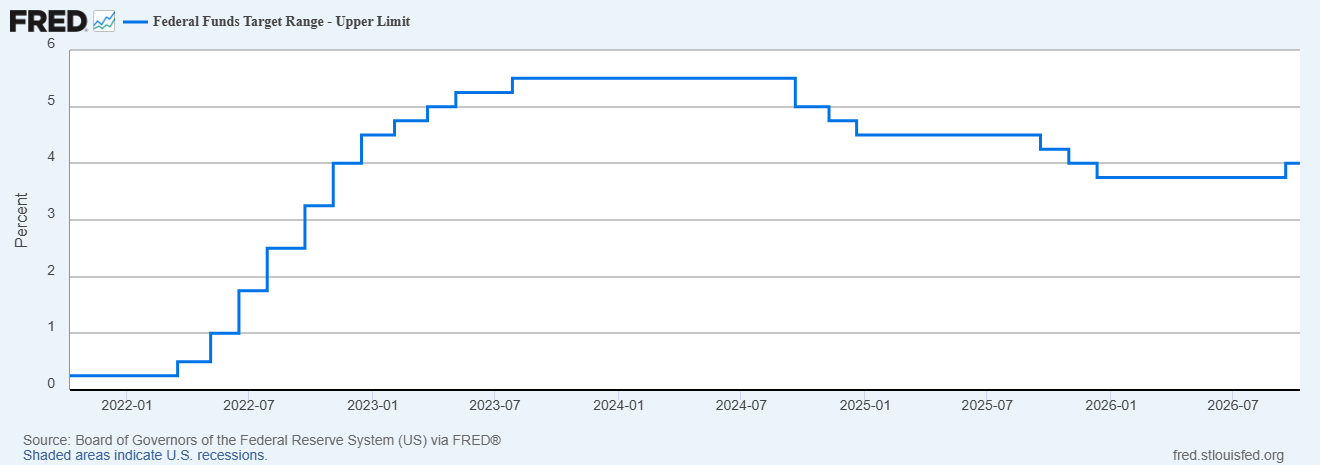
The Fed hiked rates by 0.25% in September (up to a range of 3.75-4.00%) with market participants expecting one more hike before the end of 2026.
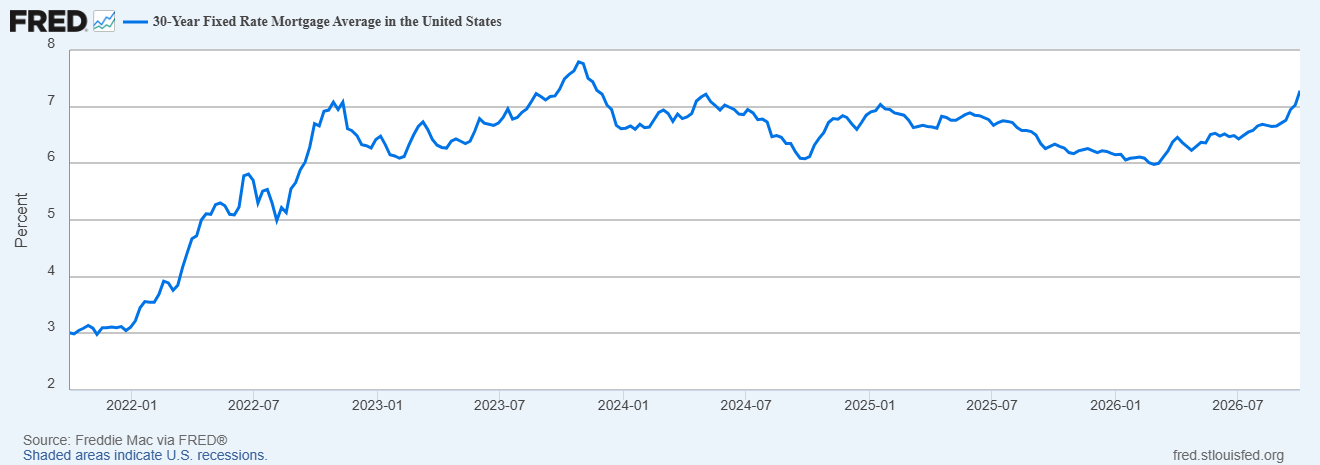
Mortgage rates increased significantly during the quarter and are now back above the 7% level for the first time since May 2024.
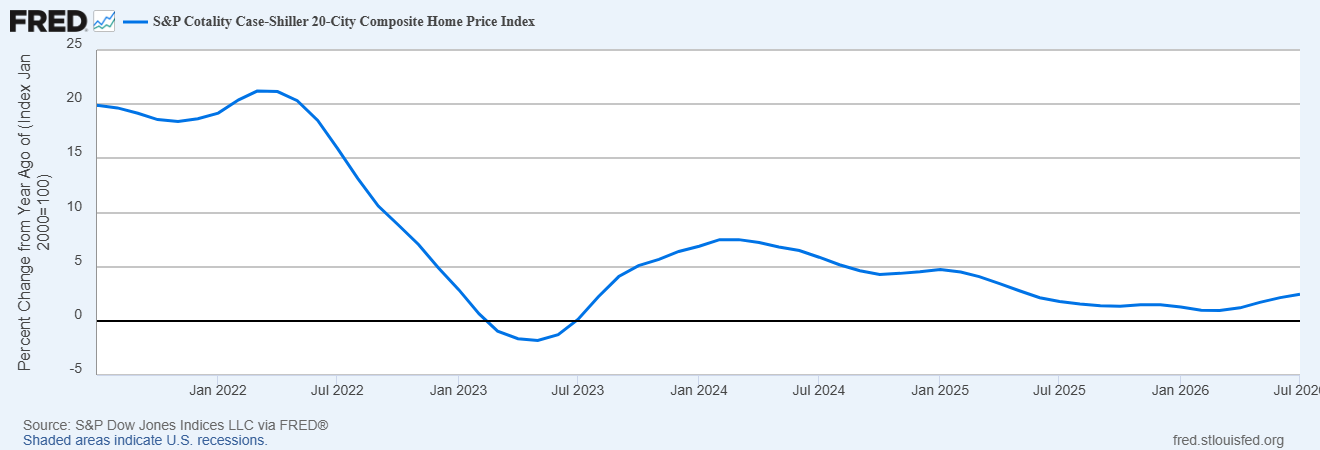
Home prices ticked higher in July on a nominal basis (+2.5% above prior year levels) but have now declined in real (inflation-adjusted) terms for 14 consecutive months driven by elevated mortgage rates.
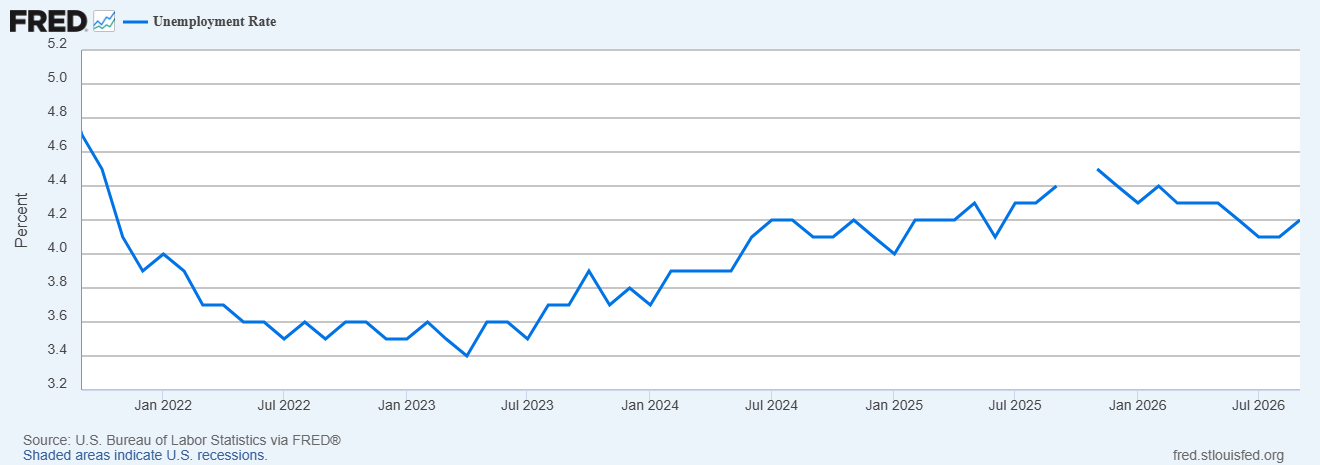
The unemployment rate held steady at 4.2% as the “low-hire, low-fire” dynamic continued with historically low initial jobless claims balanced against sluggish new job creation.
Tax, Legal, & Legislative Updates
- Trump Accounts are being opened and funded with U.S. citizens born between 2025 and 2028 qualifying for a one-time $1,000 federal contribution.
- The IRS published a notice and revenue ruling addressing perceived abuses with Section 351 exchanges (which we’ve been discussing recently).